The concept of the American Empire is often used to describe the extensive network of military bases, interventions, and influence that the United States has established worldwide. While the United States never pursued formal colonies in the manner of European empires, it has projected power globally through military, economic, and political dominance, especially since World War II. This influence includes direct military occupations, covert interventions, economic dependencies, and a complex web of alliances and security arrangements.
1. The Foundations of the American Empire: From Colonies to Global Reach
1.1 Early Territorial Expansion and Colonies
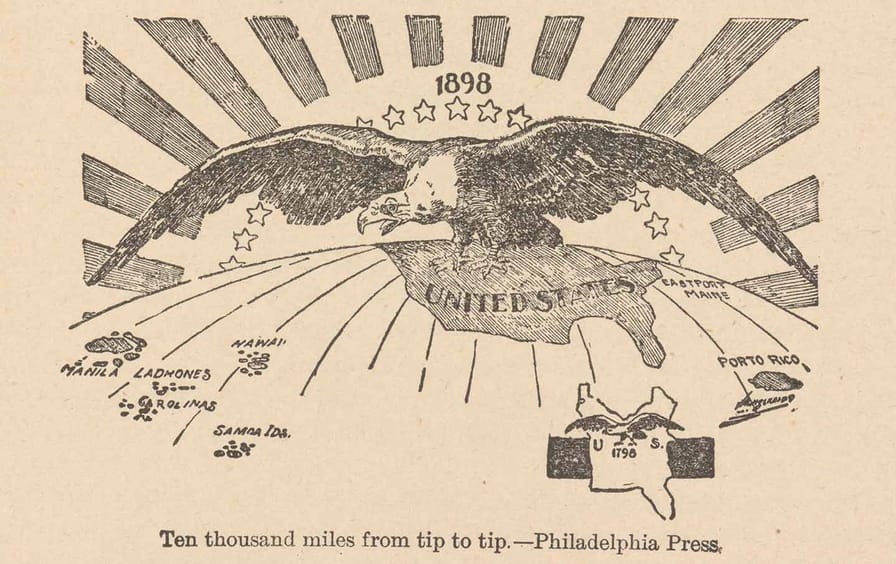
The U.S. began expanding its territory in the 19th century through wars and acquisitions. Early moves included the Mexican-American War (1846-1848), resulting in the annexation of much of the southwestern United States, and purchases such as Alaska. Overseas expansion began with the Spanish-American War (1898), through which the U.S. took control of Puerto Rico, Guam, and the Philippines, marking its first overseas empire. The Philippines endured a brutal occupation that led to the Philippine-American War, in which approximately 200,000 Filipinos died.
1.2 The “Banana Republics” and Corporate Imperialism
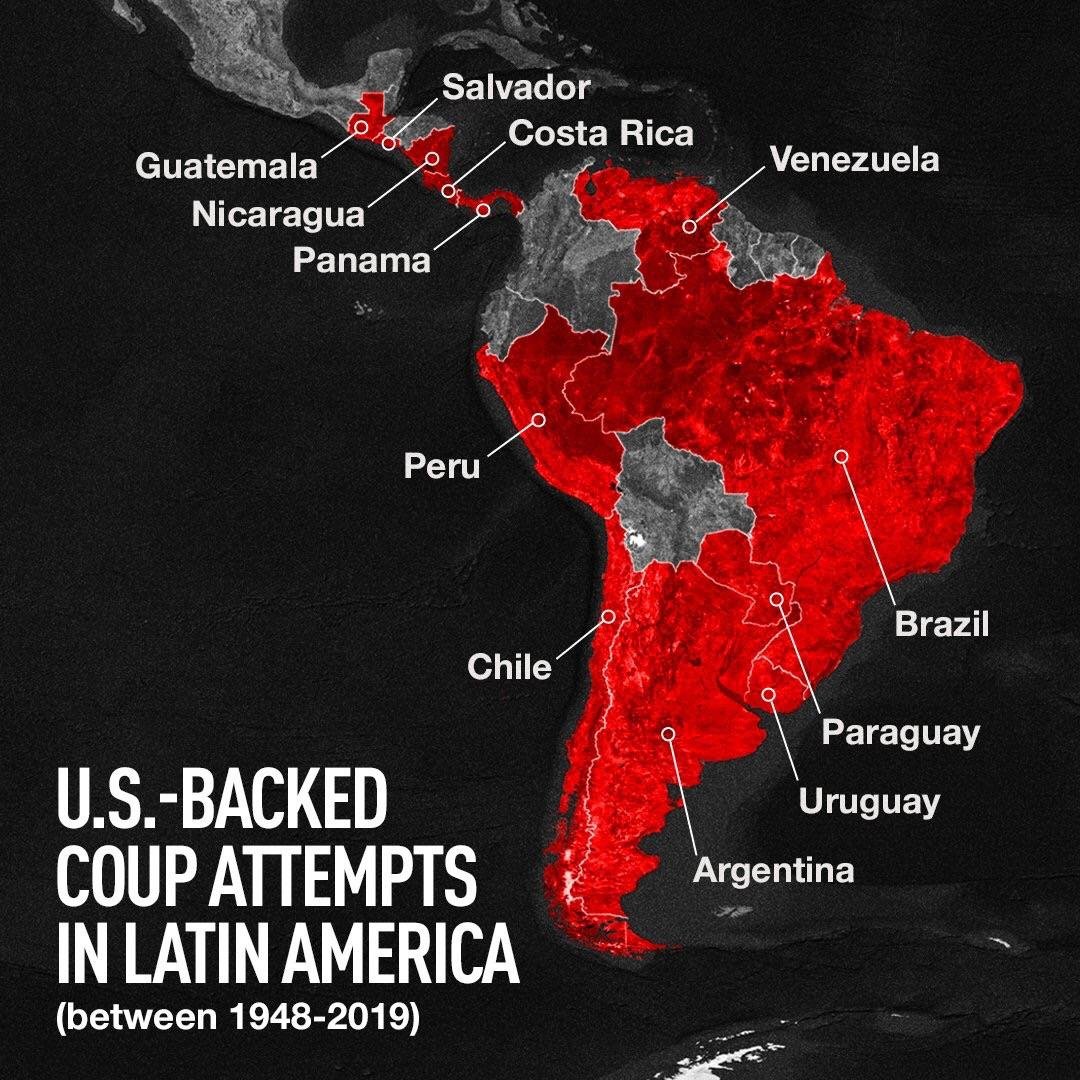
Throughout the early 20th century, U.S. corporations, particularly United Fruit Company, exerted influence in Latin America, securing control over land and labor, often at the expense of local sovereignty. U.S. interventions in Honduras, Guatemala, Nicaragua, and other nations earned these countries the moniker “banana republics” as the U.S. military repeatedly intervened to protect corporate interests and ensure friendly regimes.
2. World War II and the Cold War: Building a Global Empire
2.1 The Post-War Expansion of Military Bases
Following World War II, the U.S. emerged as a global superpower with a network of military bases spanning Europe, Asia, and the Pacific. NATO provided a military foothold in Western Europe to counter the Soviet Union, while bases in Japan and South Korea became strategic outposts in Asia. The U.S. established significant presences in Germany, Italy, Japan, and the Philippines, often as occupiers initially, before transitioning to long-term allies.
2.2 The Strategy of Containment and CIA Interventions
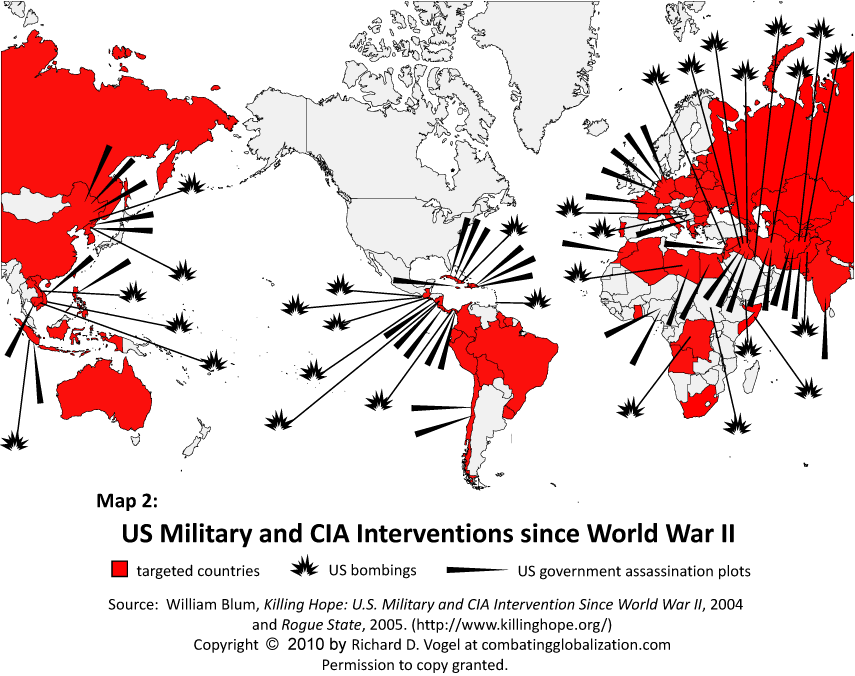
During the Cold War, the U.S. focused on containing the spread of communism, leading to widespread CIA interventions, coups, and support for anti-communist regimes. Key interventions include:
- Iran (1953): The CIA-backed coup against Prime Minister Mohammad Mossadegh, who had nationalized the oil industry, reinstalled the Shah, a pro-American monarch, leading to decades of authoritarian rule.
- Guatemala (1954): The CIA orchestrated the overthrow of President Jacobo Árbenz after he implemented land reforms that affected the interests of United Fruit. This coup resulted in decades of civil war and repression.
- Congo (1960): Following Congo’s independence from Belgium, the CIA played a role in the assassination of Patrice Lumumba and supported the rise of Mobutu Sese Seko, leading to decades of dictatorship.
- Chile (1973): The CIA supported a military coup led by General Augusto Pinochet against democratically elected President Salvador Allende, resulting in a brutal dictatorship and long-lasting impacts on Chilean society.
2.3 Vietnam and the Limits of American Power
The Vietnam War (1955-1975) represented one of the U.S.’s largest Cold War engagements, with over half a million U.S. troops deployed at the war’s height. The war ultimately ended in failure, signaling the limits of U.S. military intervention and altering public opinion about U.S. foreign policy. The trauma of the war led to the Vietnam Syndrome, where the American public and policymakers became wary of prolonged military conflicts abroad.
3. The Global Network of U.S. Military Bases and “Empire of Bases”

Today, the U.S. maintains approximately 800 military bases in over 70 countries, making it the most extensive peacetime military presence in history. Key base locations include:
- Germany: Roughly 35,000 troops stationed, including at Ramstein Air Base, a logistical hub for U.S. operations in Europe and the Middle East.
- Japan: Approximately 55,000 personnel are based, with Okinawa hosting a significant concentration, leading to local opposition due to issues of sovereignty and environmental damage.
- South Korea: The U.S. Forces Korea (USFK) presence is centered at Camp Humphreys near Seoul, providing a deterrent against North Korea.
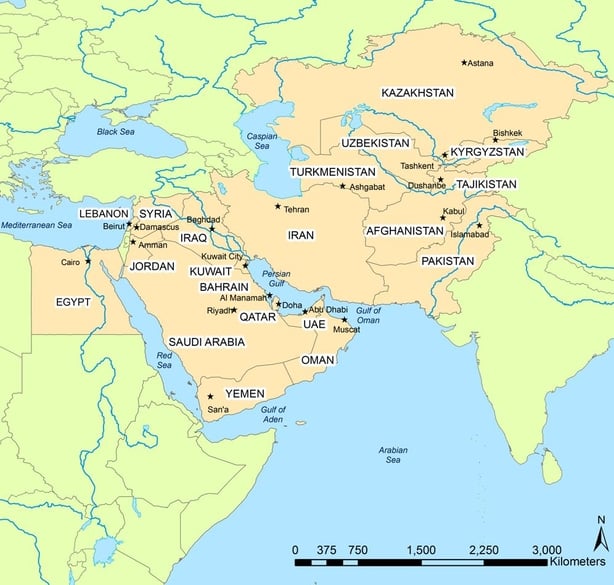
- Middle East: Bases in Qatar (Al Udeid), Bahrain, and Kuwait facilitate rapid deployment capabilities across the region, while the naval base in Bahrain hosts the U.S. Fifth Fleet, securing strategic waterways.
This global “empire of bases” enables the U.S. to project power rapidly, support allies, and deter adversaries but also stirs resentment among local populations and raises questions about sovereignty and long-term security.
4. Contemporary Interventions, “Forever Wars,” and CIA Warfare
4.1 The War on Terror and Occupations in Afghanistan and Iraq
The 9/11 attacks led to the War on Terror, beginning with the invasion of Afghanistan (2001) to dismantle al-Qaeda and remove the Taliban. The U.S. then invaded Iraq (2003) under the pretense of removing weapons of mass destruction, leading to a prolonged occupation. Both conflicts became “forever wars,” entangling the U.S. in complex insurgencies, costing trillions, and claiming thousands of lives. These occupations reshaped the Middle East but left mixed legacies, with continued instability and anti-American sentiment.
4.2 Drone Warfare and Cyber Operations
The CIA and U.S. military have increasingly turned to drone warfare to target terrorist suspects in countries like Pakistan, Yemen, and Somalia. While effective in eliminating targets, these strikes often result in civilian casualties, generating backlash and raising ethical questions. Cyber operations have also become a key component of modern warfare, with the U.S. reportedly using cyber-attacks, such as Stuxnet in Iran, to disrupt adversaries’ nuclear capabilities.
4.3 Covert Operations and Support for Proxy Wars
The U.S. has employed proxy forces to achieve foreign policy goals without direct military involvement. Examples include supporting anti-Soviet forces in Afghanistan (1980s), assisting contras in Nicaragua, and providing arms to Syrian rebels during the Syrian Civil War. These covert operations often lead to unintended consequences, including the rise of extremist groups that threaten regional stability.
5. Relations with Former Colonies and Conquered Territories
5.1 Puerto Rico and Guam
The U.S. retains territories like Puerto Rico and Guam, which lack full representation in the U.S. government. Puerto Rico, in particular, faces significant economic challenges, partly due to U.S. policies that limit its economic autonomy. Movements for statehood or independence periodically gain traction, highlighting ongoing debates over sovereignty and identity.
5.2 Philippines
After gaining independence in 1946, the Philippines retained close ties with the U.S., especially through mutual defense agreements. However, U.S. bases were removed in the 1990s due to rising anti-American sentiment, though recent security concerns in the South China Sea have led to renewed military cooperation.
5.3 Latin America and “Neo-Colonial” Influence
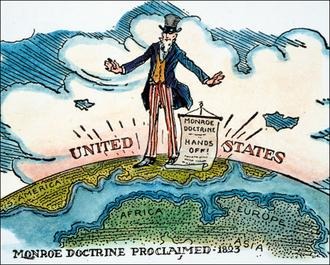
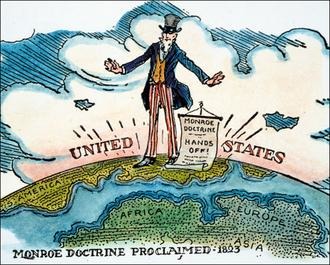
U.S. influence in Latin America has persisted through economic and political means, often criticized as neo-colonialism. American corporations and financial institutions exert influence over economies in the region, while the Monroe Doctrine legacy remains in U.S. opposition to external influence in Latin America. Countries such as Cuba and Venezuela have often faced U.S. sanctions or covert operations, aiming to curb socialist or anti-U.S. governments.
6. Global Perceptions, Criticisms, and the Future of the American Empire
6.1 Accusations of Neo-Colonialism
Critics argue that the U.S. practices a form of neo-colonialism, influencing other nations’ politics and economies through debt, sanctions, military aid, and trade. While the U.S. promotes democracy, interventions often lead to authoritarian outcomes, as in Iran, Guatemala, and Chile.
6.2 Domestic and International Backlash
Domestically, the “forever wars” have led to a strong backlash, with public opinion shifting against long-term interventions. Internationally, U.S. foreign policy, particularly military bases and interventions, often leads to resentment, with many populations viewing the U.S. as an imperial power.
6.3 Shifting Dynamics and Emerging Multipolarity
As countries like China and Russia grow in influence, the U.S. faces a multipolar world where its dominance is increasingly challenged. The question of whether the U.S. can adapt its foreign policy to focus on diplomacy and multilateralism rather than military dominance remains open.
Conclusion
The American Empire, characterized by its extensive military presence, economic power, and political influence, has shaped global geopolitics for over a century. While often justified in terms of security and democracy promotion, U.S. interventions have frequently resulted in instability, resentment, and unintended
******
The idea of an American empire is complex, rooted in a history that blends ideals of freedom and democracy with economic expansion, military power, and geopolitical influence. Unlike historical empires built through overt territorial conquest, the American approach to influence has evolved into a mix of military alliances, economic dominance, cultural exports, and ideological sway that shapes global affairs in ways both direct and subtle. This empire manifests not through colonial governance but through institutions, trade agreements, technology, and the projection of American values and interests across the world.
At its height after World War II, the U.S. positioned itself as a defender of democracy and a bulwark against the Soviet Union, establishing alliances like NATO, exerting influence through institutions like the United Nations and International Monetary Fund, and setting the global standard for free-market economics. This postwar dominance also ushered in the Cold War, where the U.S. pursued influence through proxy conflicts, aid programs, and cultural diplomacy, leading to enduring relationships, particularly in Europe, the Middle East, and Asia.
In the post-Cold War period, the concept of an American empire has shifted again, defined by economic globalization, the spread of U.S. cultural products, and the dominance of American technology firms. Yet, this influence has come with backlash and challenges: the wars in Iraq and Afghanistan, the 2008 financial crisis, and the rise of China as a global competitor have all strained the narrative of a benevolent American empire. Increasingly, countries are asserting greater autonomy, forming new alliances, and seeking to balance against U.S. influence, leading to a multipolar world where American power faces more constraints.
Today, the “American empire” endures, but its role is evolving. The U.S. continues to wield substantial power through its economy, military, and cultural impact, yet it must navigate a world where power is distributed more evenly and where new forms of influence—like cyberpower, digital connectivity, and environmental leadership—are reshaping global dynamics. The future of the American empire may not be about territorial dominance or economic hegemony but about how effectively the U.S. can adapt its influence in a world that is no longer defined by a single superpower’s will.
 Threedux Today
Leave a comment