

The concept of a “modern British Empire” today is less about formal territorial control and more about influence, partnerships, and shared history with former colonies and territories. While the British Empire as a colonial entity formally dissolved in the mid-20th century, its legacy endures through the Commonwealth of Nations, economic and diplomatic partnerships, and the United Kingdom’s ongoing military and global aspirations. This legacy continues to shape Britain’s foreign policy, its approach to security, and its influence in global institutions, balancing its historical ties with contemporary geopolitical challenges.
1. Historical Legacy and Commonwealth of Nations

The Commonwealth as a Soft Power Tool
The Commonwealth of Nations—an intergovernmental organization consisting of 56 member states, most of which are former British colonies—is a primary framework through which Britain maintains its historical connections. While the Commonwealth does not impose legal obligations, it provides a platform for economic, cultural, and educational exchange. Britain leverages the Commonwealth as a form of soft power, fostering goodwill and promoting democratic values, development, and cooperation.
Mixed Legacies and Calls for Reconciliation
The colonial legacy also includes complex and often painful histories, particularly in places like India, the Caribbean, and Africa. In recent years, Britain has faced increasing calls from former colonies for reparations and acknowledgment of colonial injustices, particularly concerning issues like slavery, resource extraction, and economic exploitation. These calls have led to a re-evaluation of Britain’s role in former colonies, with some Commonwealth countries debating whether to remove the British monarch as their head of state or fully sever political ties with the U.K.
Maintaining Relationships with Key Commonwealth States
Despite these challenges, Britain maintains close ties with influential Commonwealth states, including India, Australia, Canada, and South Africa. India, with its rapidly growing economy, is particularly important, and Britain actively courts it as a trade and strategic partner. The U.K.’s relationships with Australia and Canada, members of the Five Eyes intelligence alliance, are crucial to Britain’s security infrastructure. Additionally, as part of the Commonwealth, Britain also works on developmental projects and disaster relief, which bolster its image as a partner for progress in the Global South.
2. Strategic Military Alliances and Defense Relationships

The U.K.’s “Global Britain” Strategy
The “Global Britain” initiative, launched post-Brexit, aims to position the U.K. as an independent, globally influential state. As part of this strategy, Britain has renewed its focus on strengthening defense and trade relationships, particularly with countries in the Indo-Pacific region. The U.K. has committed to increasing its defense spending and has expanded its Royal Navy presence in the South China Sea, often in coordination with the United States, Australia, and Japan. This positioning underscores Britain’s intention to remain a relevant player in global security.
Military Partnerships and Deployments in Former Colonies
The U.K. maintains several strategic military bases and deployments in former colonies, such as Gibraltar, Cyprus, the Falkland Islands, and Diego Garcia in the Indian Ocean. These bases enable Britain to project power and maintain a presence in key regions. For example:
- Gibraltar provides access to the Mediterranean Sea.
- Cyprus hosts British military bases that are crucial for operations in the Middle East.
- Diego Garcia, leased to the U.S., is a critical military asset in the Indian Ocean for both British and American forces, underscoring the U.K.’s importance as a U.S. ally in the region.

AUKUS and Defense Cooperation with the U.S. and Australia
The AUKUS alliance—a trilateral security pact with the United States and Australia—highlights Britain’s commitment to countering China’s influence in the Indo-Pacific. Through AUKUS, Britain will provide Australia with technology and expertise to develop nuclear-powered submarines, signaling the U.K.’s dedication to a long-term security partnership in the Pacific. This move aligns with British defense goals and reflects a modern adaptation of its historical “east of Suez” strategy, demonstrating its ongoing role in maintaining security in former colonial spheres.
3. Economic Relationships and Trade with Former Colonies
Pursuing New Trade Agreements Post-Brexit
Post-Brexit, Britain has sought to diversify its trade relationships, often turning to former colonies and Commonwealth nations. The Comprehensive and Progressive Agreement for Trans-Pacific Partnership (CPTPP), which includes members like Australia, Canada, and Malaysia, is a strategic target for Britain, and it became the first European country to join in 2023. Britain has also signed trade deals with Commonwealth countries such as Australia and New Zealand and is negotiating further agreements with India and African nations. This approach underscores Britain’s reliance on its historical networks to bolster trade as it establishes itself outside of the European Union.
Aid and Investment as Influence Tools
Britain also uses foreign aid and investment as instruments to maintain influence, particularly in Africa and the Caribbean. The U.K. has traditionally been a significant development partner for Commonwealth nations, and while recent cuts to the U.K.’s foreign aid budget have sparked criticism, the government has emphasized “aid for trade” partnerships. These investments promote British influence in key sectors, such as infrastructure, healthcare, and education, aiming to compete with China’s Belt and Road Initiative in the developing world.
Financial Hubs and the Legacy of the City of London
The City of London remains a global financial hub, with deep ties to former colonies. Financial institutions in the U.K. play a crucial role in investment, banking, and commodity trading for many Commonwealth nations, especially those in Africa and the Caribbean. These relationships are mutually beneficial; however, they also illustrate lingering economic dependencies, with many former colonies reliant on British financial systems for investment and development.
4. Diplomatic and Cultural Influence
Promoting English Language and Education Programs
British cultural influence endures through the English language and educational programs. Institutions like the British Council operate extensively in former colonies, promoting English, cultural exchange, and educational partnerships. Many Commonwealth citizens pursue education in the U.K., and British universities maintain partnerships and branch campuses in countries like India, Malaysia, and the UAE. This “cultural diplomacy” enhances Britain’s influence by fostering personal and professional networks that often lead to long-term diplomatic and economic connections.
Cultural Exchange and the Monarchy’s Soft Power
The British monarchy, a symbolic institution for several Commonwealth countries, remains a unique asset for Britain. While recent years have seen debates over the relevance of the monarchy, particularly in the Caribbean, the royal family’s soft power remains a source of British cultural influence. Royal visits to Commonwealth nations help to strengthen diplomatic relationships, though recent events, such as Barbados’ decision to become a republic in 2021, indicate that this influence may be waning as former colonies reassess their historical ties.
5. Challenges and Future of British Influence

Balancing Legacy with Modern Diplomacy
The U.K. faces a complex balancing act in addressing the lingering impacts of colonialism while pursuing its global ambitions. The calls for reparations, particularly from Caribbean nations and African leaders, represent a significant challenge. Britain has taken limited steps toward addressing these demands, but full acknowledgment of colonial harms remains politically sensitive and controversial.
Competing with Emerging Powers
In the post-colonial era, Britain now faces competition from emerging powers, particularly China and India, in many of its former territories. China’s investment through the Belt and Road Initiative (BRI) in Africa and the Caribbean challenges British influence in areas that were once closely linked to the U.K. Economically and diplomatically, Britain finds itself competing with these new power players for influence, often using its Commonwealth connections to counterbalance China’s growing presence.
Maintaining Global Relevance as a Middle Power
Despite no longer being a superpower, Britain’s efforts to project itself as a “Global Britain” indicate its determination to remain a significant middle power. Through alliances like NATO, AUKUS, and the Five Eyes intelligence network, Britain aims to ensure its voice is heard in key international decisions, particularly on issues of security, counter-terrorism, and global trade.
Conclusion
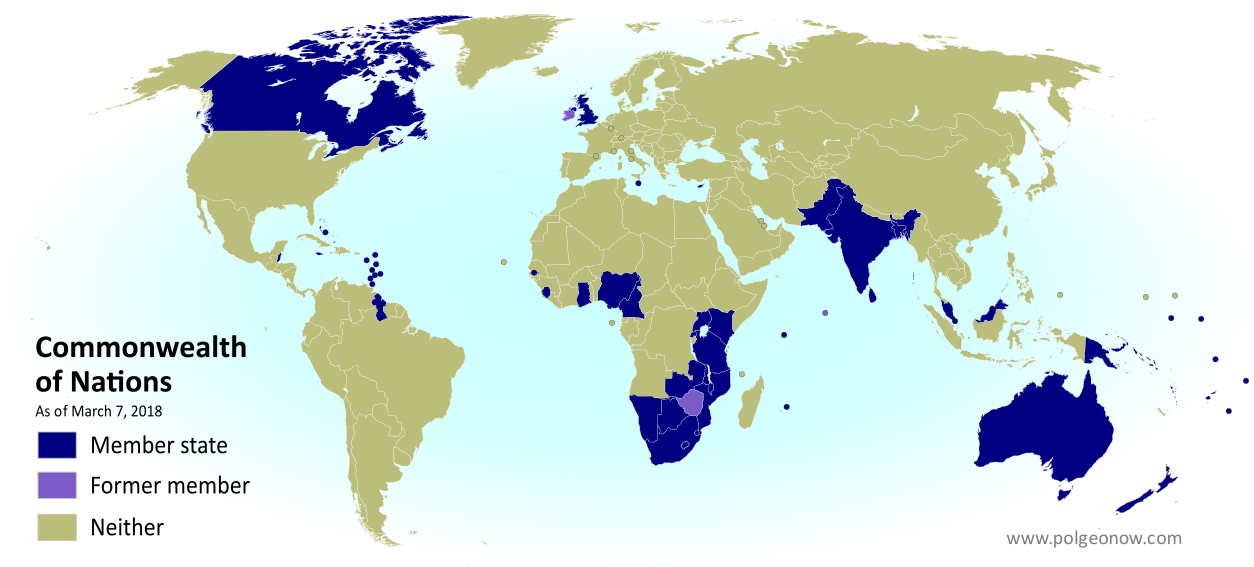
The concept of a modern British Empire today is less about control and more about influence, networks, and strategic partnerships. Britain leverages its historical ties with former colonies and Commonwealth nations to pursue its goals on the global stage, from trade agreements to defense partnerships. However, the U.K. faces a set of complex challenges—balancing its legacy of colonialism with contemporary diplomatic objectives, navigating calls for reparations, and contending with rival influences from powers like China.
As Britain moves forward, the legacy of its empire remains both an asset and a liability. The U.K.’s ability to adapt its historical connections into modern alliances will shape its future, as it seeks to remain relevant in an increasingly multipolar world. Through military alliances, trade agreements, and soft power, Britain’s reimagined influence aims to continue shaping global affairs, albeit in ways adapted to the realities of the 21st century.
 Threedux Today
Leave a comment